Service Hotline:13510328459
 205-206, 2nd Floor, Building 2, Xiazao Village Industrial Zone, Gaofeng Community, Dalang Street, Longhua District, Shenzhen City
Service Hotline:13510328459
205-206, 2nd Floor, Building 2, Xiazao Village Industrial Zone, Gaofeng Community, Dalang Street, Longhua District, Shenzhen City



Time:2026-02-07 Preview:
In the construction and renovation of modern healthcare facilities, safety infrastructure is a top priority. For B2B buyers, contractors, and hospital procurement officers, selecting the right Hospital Corridor Handrails is not just about aesthetics—it is about meeting stringent building codes, ensuring patient mobility, and minimizing long-term maintenance costs.
As a leading manufacturer, Econley provides high-performance, durable, and compliant railing solutions designed specifically for the rigorous demands of hospitals, nursing homes, and rehabilitation centers. This guide explores everything you need to know about sourcing, compliance, and customization for medical-grade handrails in 2026.
A common question among new facility developers is: Are handrails required in hospital corridors? The answer is a definitive yes. According to the ADA (Americans with Disabilities Act) and international building codes (IBC), corridors in healthcare facilities that serve as part of an accessible route must be equipped with handrails to support patients with mobility impairments.
Hospital Corridor Handrails serve three vital functions:
Patient Mobility: They provide a steady grip for patients recovering from surgery or those with balance issues.
Wall Protection: Corridors are high-traffic zones. Handrails act as "crash rails" or "bumper guards" to protect walls from damage caused by hospital beds, stretchers, and heavy equipment.
Emergency Evacuation: During emergencies, handrails provide a continuous tactile guide for safe egress.
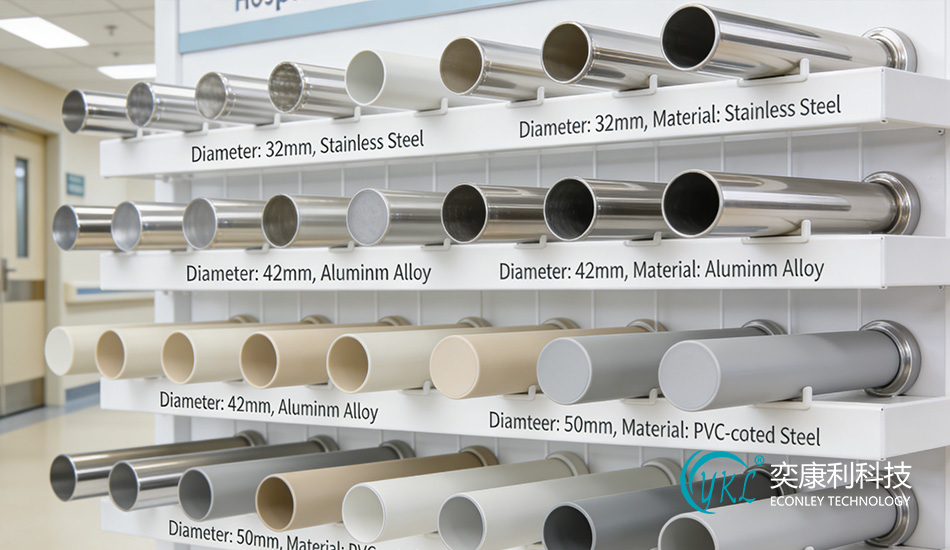
Compliance is the foundation of any medical project. Failure to meet the corridor handrail requirements can lead to failed inspections and costly retrofits.
To meet global standards, the corridor handrail height must be consistent.
Height Standard: Handrails should be mounted between 34 inches and 38 inches (865 mm – 965 mm) above the floor.
Gripping Surface: The rail must be easy to grasp, typically with a diameter of 1.25 to 1.5 inches.
Clearance: There must be at least 1.5 inches of clear space between the wall and the handrail to allow for a full power grip.
While corridor rails focus on horizontal support, stairs require specific attention. What is the code for handrails on stairs? Stair handrails must be continuous on both sides of the stairs, with specific extensions at the top and bottom landings to ensure the user is supported before and after the change in elevation.
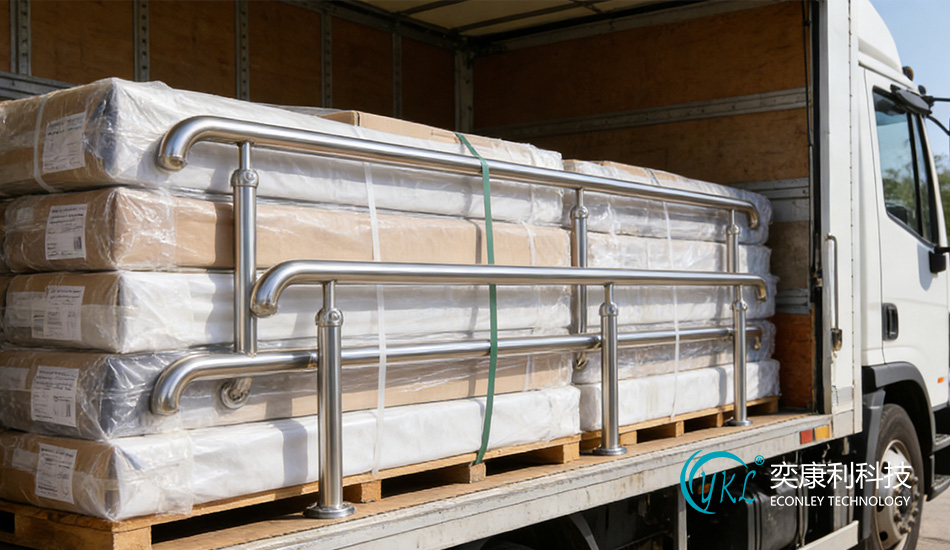
Every medical facility has a unique layout. A "one-size-fits-all" approach rarely works for complex hospital architecture. This is where a Custom Corridor Handrail strategy becomes essential for contractors.
In pediatric wards, a Custom Accessible Handrail might feature a dual-rail system: one at standard height for adults and a lower rail for children. In psychiatric wards, "anti-ligature" designs are used to close the gap between the rail and the wall for enhanced safety.
Econley specializes in hospital corridor pvc handrail systems with aluminum alloy inserts.
Aluminum Core: Provides the structural strength required to support heavy loads.
PVC/Vinyl Cover: Offers a "warm-to-touch" surface that is antibacterial and resistant to harsh chemical disinfectants used in hospitals.
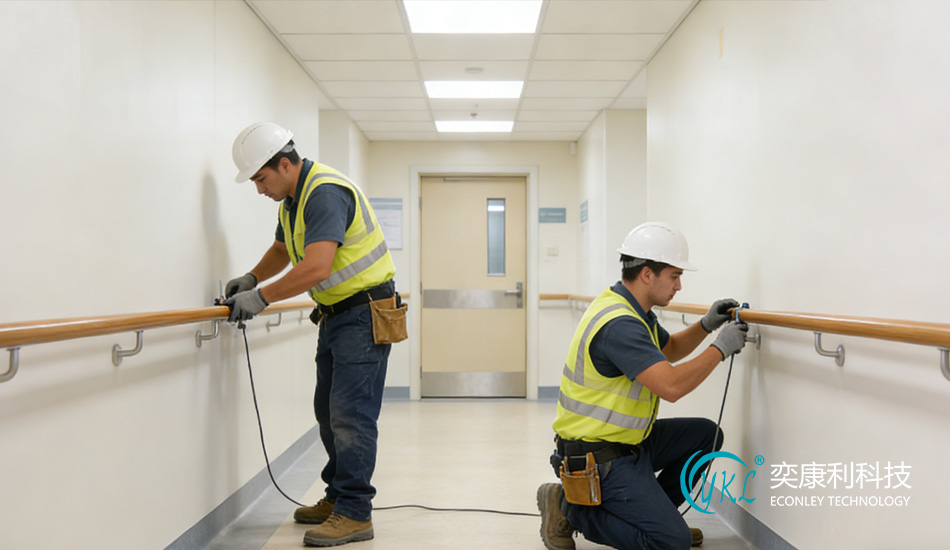
The safety path does not end in the hallway. A Hospital Bathroom Grab Bar is equally critical for patient independence in private bathrooms and shared washrooms.
The Hospital Accessible Handrail used in bathrooms must be slip-resistant and capable of supporting at least 250 lbs of concentrated force. Econley’s grab bars are designed with textured surfaces and stainless steel or reinforced nylon to withstand high-moisture environments without rusting or degrading.
For factories and construction firms, sourcing directly from a manufacturer like Econley offers significant competitive advantages:
Wholesale Pricing: Buying in bulk reduces the per-unit cost for large hospital wings.
Color Matching & Branding: We can produce Custom Corridor Handrails in specific colors to match the hospital's wayfinding system (e.g., green for the pharmacy wing).
Certified Quality: Our products undergo rigorous testing for fire retardancy (Class A rating) and impact resistance.
OEM/ODM Flexibility: We can manufacture based on your specific CAD drawings and project requirements.
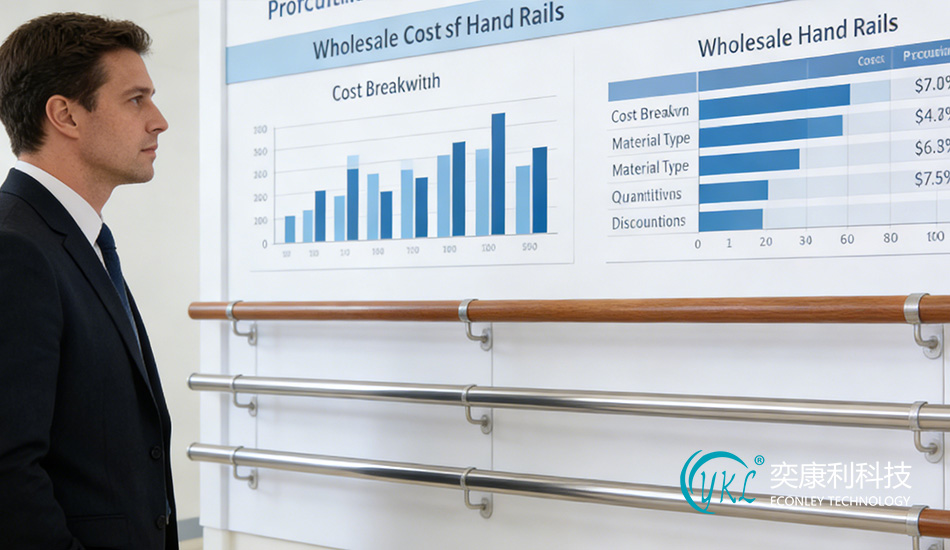
Selecting Hospital Corridor Handrails is a balance of meeting legal corridor handrail requirements, ensuring patient safety, and protecting the building’s infrastructure. By investing in a Custom Accessible Handrail system, you ensure that your facility is compliant, durable, and ready to serve patients for decades to progress.
At Econley, we are committed to providing the highest quality safety solutions for global healthcare projects. Whether you need a standard Hospital Accessible Handrail or a complex custom system, our team is ready to support your technical needs.
OSHA (Occupational Safety and Health Administration) requires handrails in workplaces to be at least 30 inches to 38 inches high. However, for medical facilities, ADA standards (34-38 inches) usually take precedence as they are more specific to public accessibility. Econley designs all rails to meet the stricter of these standards to ensure universal compliance.
In a hospital setting, "side rails" can refer to two things:
Wall-mounted handrails: Used for walking support in corridors.
Bed rails: Integrated into hospital beds for patient safety.Econley focuses on wall-mounted Hospital Corridor Handrails and crash rails that protect the wall and support the patient.
For most healthcare facilities, the minimum clear width for a corridor used for moving patients in beds is 8 feet (96 inches). This width ensures that two beds can pass each other and that there is sufficient room even with Hospital Corridor Handrails mounted on both sides.
Guidelines specify that handrails must be:
Continuous: Without interruptions that could catch clothing.
Grip-friendly: No sharp edges; a rounded profile is preferred.
Load-bearing: Capable of withstanding a 200 lb load from any direction.
Terminated: Ends must return to the wall to prevent snagging.
Related content
Hospital Curtain Tracks | Aluminum Ceiling Track Systems | Econley
Hospital Curtains: A Guide to Antibacterial & Fire-Retardant Standards
Best Hospital Curtain Tracks 2026 | Durable Ceiling Track Systems | Econley
Wholesale Hospital Bathroom Curtains | Waterproof & Fire-Retardant | Econley
Hospital Divider Curtains & Tracks | Durable Medical Fabrics | Econley
Hospital Handrails Manufacturer | ADA Compliant Corridor Safety | Econley
 Tel :13510328459
 Email :493432861@qq.com
 Phone :0755-82154850/25907050
 Add:205-206, 2nd Floor, Building 2, Xiazao Village Industrial Zone, Gaofeng Community, Dalang Street, Longhua District, Shenzhen City

About

Products
Cases
News
Contact
 493432861@qq.com