Service Hotline:13510328459
 205-206, 2nd Floor, Building 2, Xiazao Village Industrial Zone, Gaofeng Community, Dalang Street, Longhua District, Shenzhen City
Service Hotline:13510328459
205-206, 2nd Floor, Building 2, Xiazao Village Industrial Zone, Gaofeng Community, Dalang Street, Longhua District, Shenzhen City



Time:2026-01-14 Preview:
Corridors are the most frequently used public spaces in nursing homes, serving as the main passage for elderly residents to move between bedrooms, dining areas, activity rooms, and medical stations. Nursing Home Corridor Handrail, as a core safety facility tailored to the physical characteristics of the elderly, plays an irreplaceable role in preventing falls, providing mobility support, and protecting the dignity of residents. Unlike hospital or public building handrails, Nursing Home Corridor Handrail focuses more on the adaptability to elderly people with limited mobility, such as those with weak muscle strength, balance disorders, or visual impairments. It integrates safety, ergonomics, and humanistic care, creating a secure and comfortable moving environment for the elderly. This article explores the core value, adaptive design points, full-scenario optimization solutions, selection and maintenance strategies, and humanistic care integration of Nursing Home Corridor Handrail, providing comprehensive guidance for nursing home administrators and facility managers.
The primary value of Nursing Home Corridor Handrail lies in fall prevention and mobility support. Elderly residents often face problems such as weakened leg strength, poor balance, and slow reaction speed, making them prone to falls when walking in corridors. The continuous and stable support provided by Nursing Home Corridor Handrail helps residents maintain body balance, reduce the burden on lower limbs, and effectively avoid fall accidents caused by sudden dizziness or leg weakness. For semi-independent elderly people, the handrail enables them to move independently without relying on caregivers, which is crucial for maintaining their self-esteem and quality of life.
Another key value is guiding and reassuring. For elderly residents with visual impairments or cognitive decline, Nursing Home Corridor Handrail serves as a reliable navigation tool. The continuous handrail can guide them to identify the direction and reach the target area smoothly. At the same time, the tactile sense of grasping the handrail can alleviate the anxiety and fear of the elderly when moving in an unfamiliar environment, enhancing their sense of security. Additionally, the existence of handrails also facilitates the assistance of caregivers, allowing them to support residents more effectively when needed, improving the efficiency of care services.
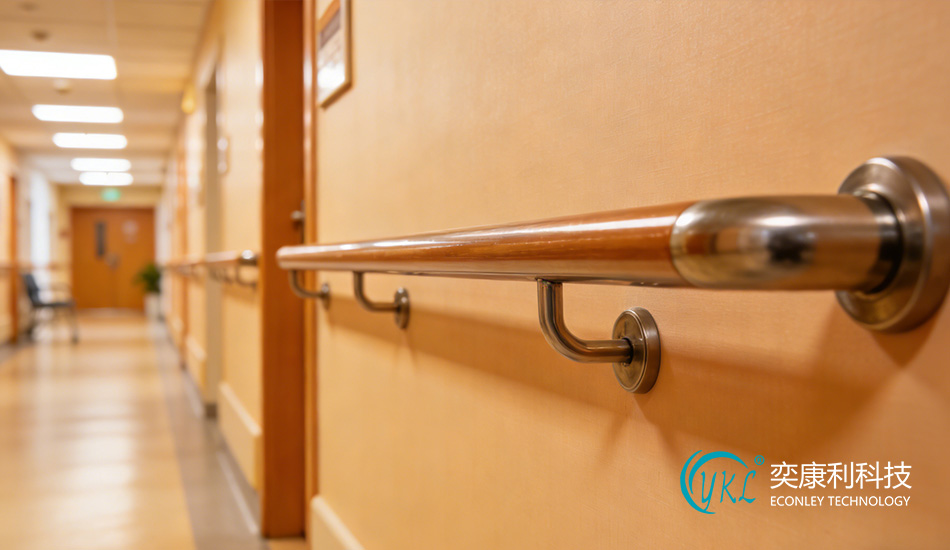
The height of Nursing Home Corridor Handrail must be strictly based on the ergonomic characteristics of the elderly. The optimal height range is designed to fit the average arm length and grip posture of the elderly, ensuring that they can grasp the handrail naturally without excessive bending or lifting. For elderly people of different heights or with different mobility conditions, some nursing homes adopt adjustable-height handrails to meet personalized needs. The grip diameter of the handrail is also carefully designed, which should be suitable for the size of the elderly's hands to avoid discomfort caused by too thick or too thin grip, and ensure a firm grip even with weak hand strength.
The surface texture of Nursing Home Corridor Handrail is crucial for anti-slip performance. The handrail surface is usually treated with a soft anti-slip texture, which can increase friction even when the elderly's hands are sweaty, preventing the hand from slipping. In terms of material selection, it is necessary to prioritize non-toxic, corrosion-resistant, and easy-to-clean materials. At the same time, the material should have a certain warmth retention to avoid the cold feeling of metal materials in winter, which can cause discomfort to the elderly. Common materials include warm wood-grain composite materials, anti-slip plastic, and stainless steel with soft surface treatment.
Nursing Home Corridor Handrail must maintain continuous installation without breaks in the entire corridor. Special attention should be paid to the connection parts at corners, intersections, and doorways to ensure smooth transitions without sharp edges or protrusions. At the same time, the handrail should be connected with other facilities in the corridor, such as ramps, elevators, and seating areas, forming a seamless barrier-free support system. For example, the handrail should extend a certain length at the entrance of the elevator to help the elderly stabilize their bodies before entering and exiting the elevator.
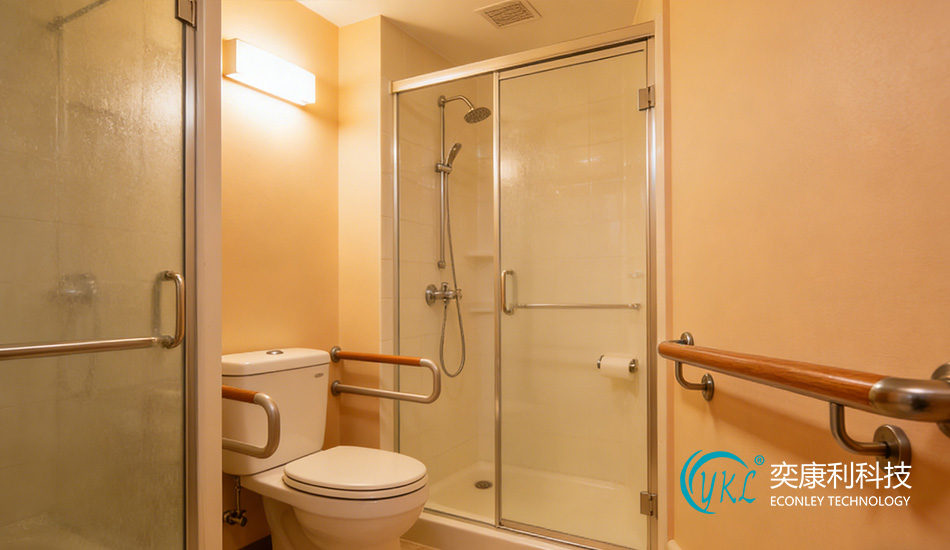
In long corridor sections of nursing homes, Nursing Home Corridor Handrail can be integrated with rest points. Set seating areas at regular intervals along the corridor, and extend the handrail to the side of the seating area to facilitate the elderly to sit down and stand up. The handrail near the rest point can be designed with a slightly lower height to match the sitting posture of the elderly, providing support when they get up. This design not only relieves the fatigue of the elderly when walking long distances but also enhances the safety of getting up and sitting down.
At corridor turns and intersections, Nursing Home Corridor Handrail can be equipped with visual and tactile guidance functions. For visually impaired elderly, the handrail can be designed with raised tactile marks, such as dots or strips, to remind them of the upcoming turn or intersection. At the same time, the handrail can adopt high-contrast colors with the wall, such as bright yellow or orange, to help the elderly with poor eyesight identify the handrail quickly. Additionally, the turning part of the handrail should be designed with a gentle arc to avoid sudden direction changes that may cause the elderly to lose balance.
Near medical stations, pharmacies, and other service areas in the corridor, Nursing Home Corridor Handrail can be extended with functional designs. For example, a small platform can be added beside the handrail for the elderly to place medical records or water cups when waiting for medical services. The handrail in these areas can also be designed with a slightly higher load-bearing capacity to meet the needs of elderly people who may need more support when feeling unwell.
When selecting Nursing Home Corridor Handrail, the first priority is safety performance. The handrail must meet relevant national and industry standards for elderly care facilities, with reliable load-bearing capacity and structural stability. Secondly, it is necessary to consider adaptability to the elderly's needs, such as anti-slip performance, height adjustability, and warm material. Finally, durability is also an important criterion. The handrail should be able to withstand long-term use and frequent cleaning, and not easily deform or damage. It is recommended to choose products from reputable manufacturers with rich experience in elderly care facility projects.
Regular maintenance is essential to ensure the long-term safety and usability of Nursing Home Corridor Handrail. Nursing homes should establish a routine inspection system to check for loose fasteners, wear and tear, or corrosion of the handrail regularly. The handrail surface should be cleaned and disinfected regularly with mild disinfectants that do not damage the material, especially in seasons with high incidence of infectious diseases. For damaged handrails, such as cracked surfaces or loose connections, they should be repaired or replaced immediately to avoid safety hazards. At the same time, collect feedback from the elderly and caregivers on the use of handrails regularly, and make appropriate adjustments and improvements.
High-quality Nursing Home Corridor Handrail not only provides safety support but also integrates humanistic care. The design of the handrail should avoid a cold clinical feeling and adopt warm colors and natural textures to create a homely atmosphere. For example, handrails with wood-grain textures can be used to match the warm decoration style of the nursing home. Additionally, the installation position of the handrail should not affect the passage of wheelchairs and stretchers, ensuring the smoothness of medical and care services.
Some nursing homes also add personalized elements to the Nursing Home Corridor Handrail, such as marking the direction of each functional area on the handrail with simple and clear patterns or text, which is convenient for elderly people with cognitive decline to identify. At the same time, the handrail should be installed without protruding parts to avoid scratching the elderly's clothes or skin, ensuring the safety and comfort of use.
Nursing Home Corridor Handrail is a key facility for protecting the safety and dignity of elderly residents, and it is an important part of building a high-quality elderly care environment. By adopting adaptive design, optimizing full-scenario solutions, and integrating humanistic care, Nursing Home Corridor Handrail can effectively improve the mobility safety and quality of life of the elderly. For nursing home administrators, selecting the right Nursing Home Corridor Handrail and doing a good job in daily maintenance is a key measure to enhance the level of elderly care services. If you need personalized recommendations for Nursing Home Corridor Handrail solutions tailored to your facility's needs, contact us today. We will connect you with professional manufacturers and provide expert guidance to help you build a safe, comfortable, and humanistic living environment for elderly residents.
 Tel :13510328459
 Email :493432861@qq.com
 Phone :0755-82154850/25907050
 Add:205-206, 2nd Floor, Building 2, Xiazao Village Industrial Zone, Gaofeng Community, Dalang Street, Longhua District, Shenzhen City

About

Products
Cases
News
Contact
 493432861@qq.com